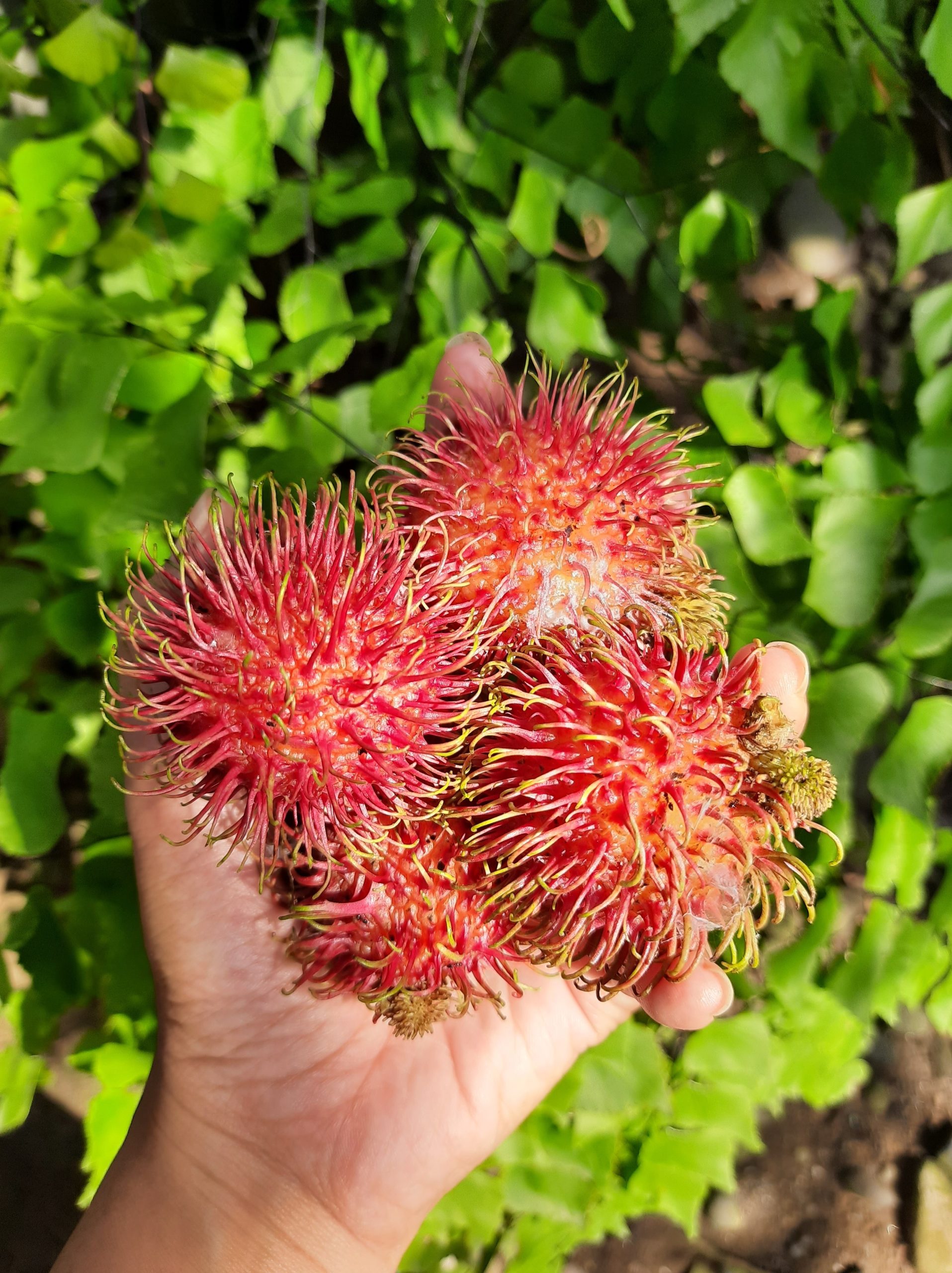
Rongrien: The country’s primary export cultivar, producing large fruits with vibrant red skin, long green-tipped spines, and thick, creamy flesh with high sugar content. Rongrien is favored internationally for its sweetness and shelf stability.
Source Premium Fresh Rambutan For Export From Thailand
Fresh Point, a certified Thai rambutan export supplier since 1995, handles the full supply chain for this popular tropical fruit, delivering graded, export-ready rambutan to importers, distributors, and retail partners worldwide. With an estimated annual harvest of 450,000 tons, Thailand is among the world's largest rambutan producers and a go-to source for international buyers.
GET IN TOUCH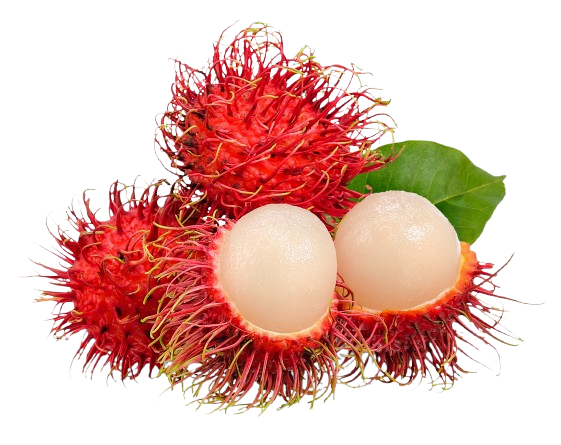
Rambutan Varieties Grown for Export
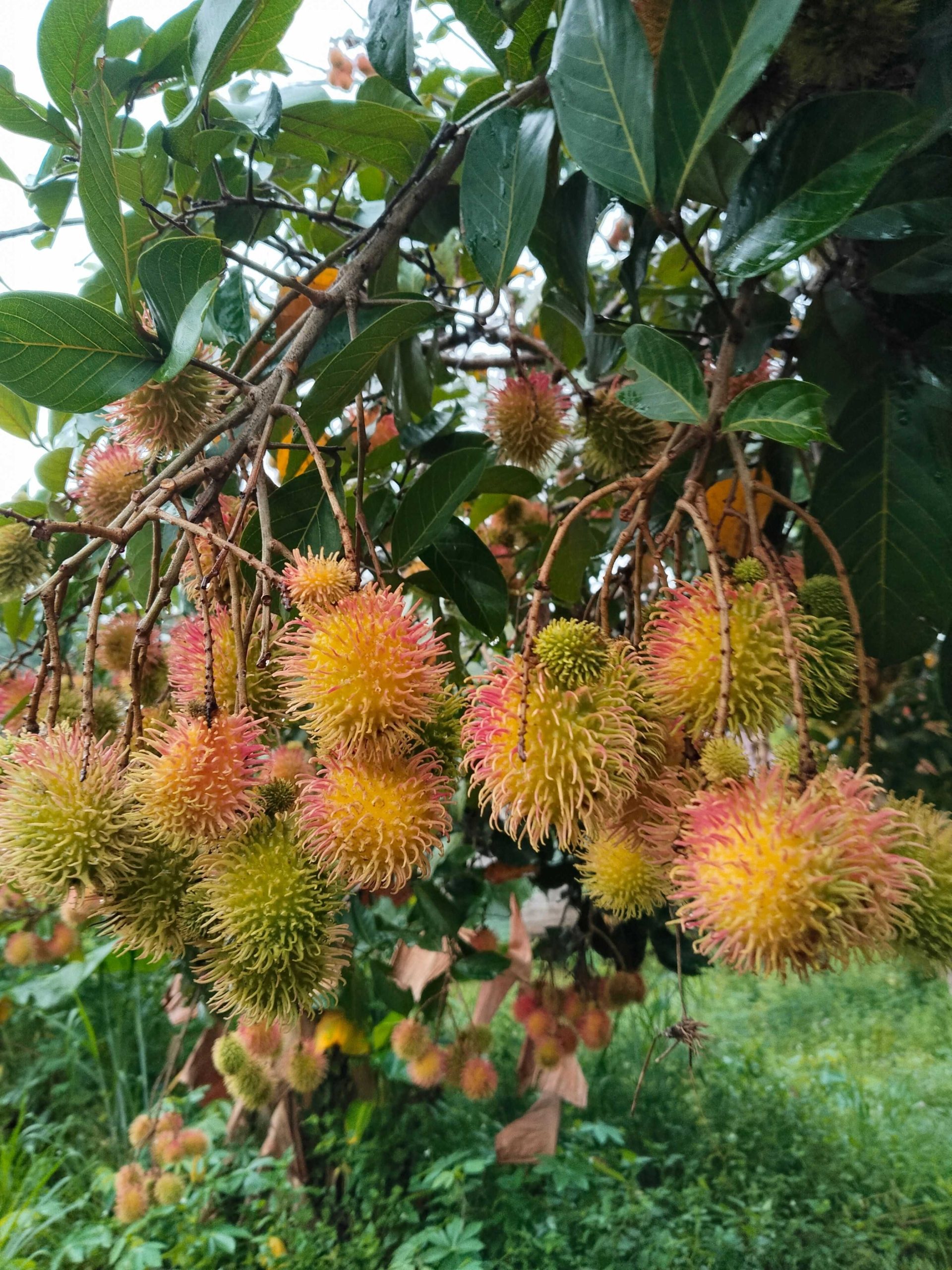
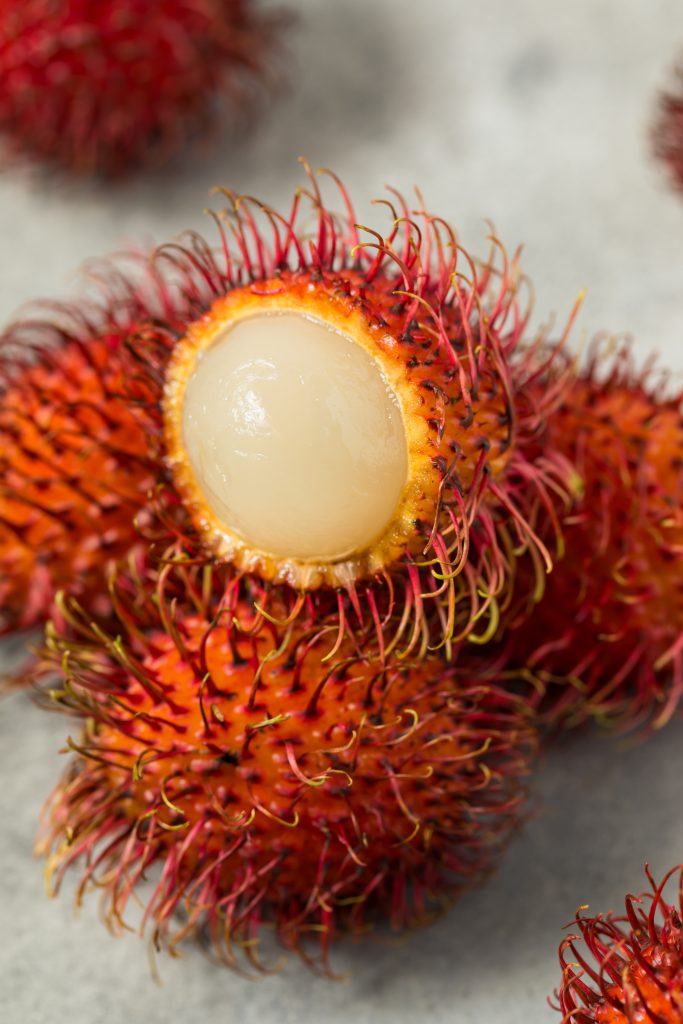
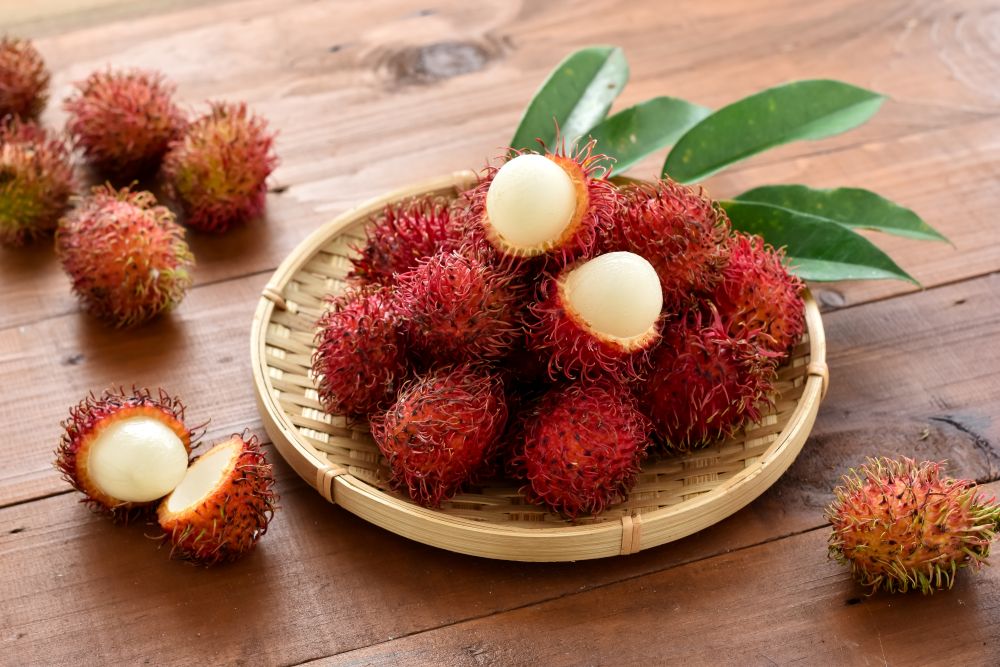
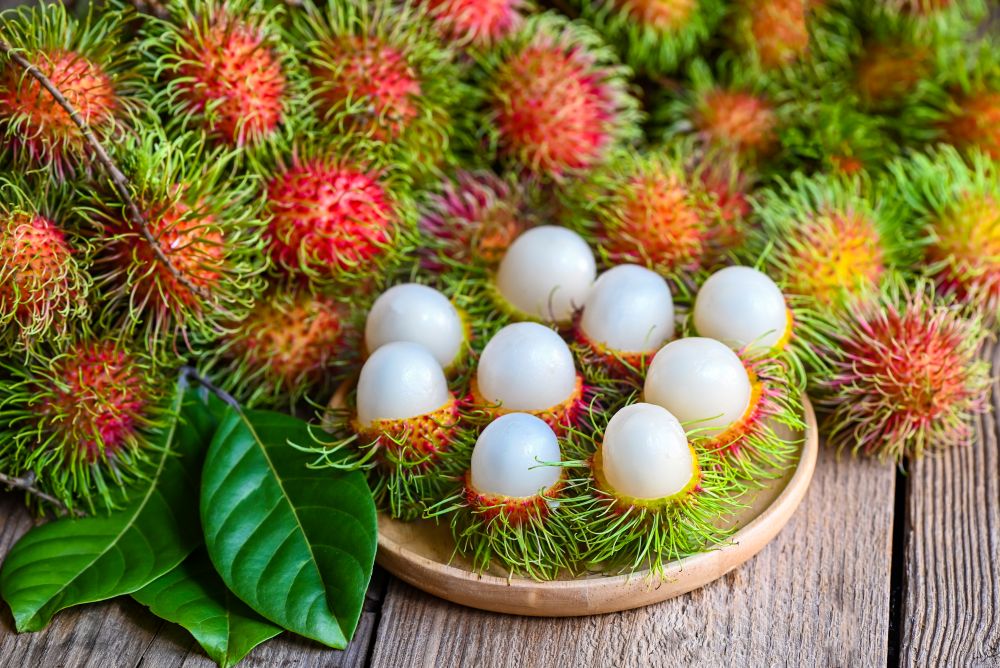
Rambutan (Nephelium lappaceum) is recognized by its striking red skin and soft, hair-like spines. Beneath the shell, the translucent flesh is juicy, naturally sweet, and similar in texture to lychee. Thailand grows several commercial varieties, with two accounting for the majority of export volume:
At Fresh Point, every fruit is inspected for size, color, spine condition, and sugar level before packing. Only rambutan that meets export-grade standards ships out, so buyers receiving a fresh rambutan export order can expect uniform quality in every carton.
Where and When Thai Rambutan is Harvested
Rambutan thrives in Thailand’s humid, tropical lowlands. The primary growing provinces are Chanthaburi, Rayong, Trat, and Surat Thani, all regions with established orchard infrastructure and experienced grower networks.
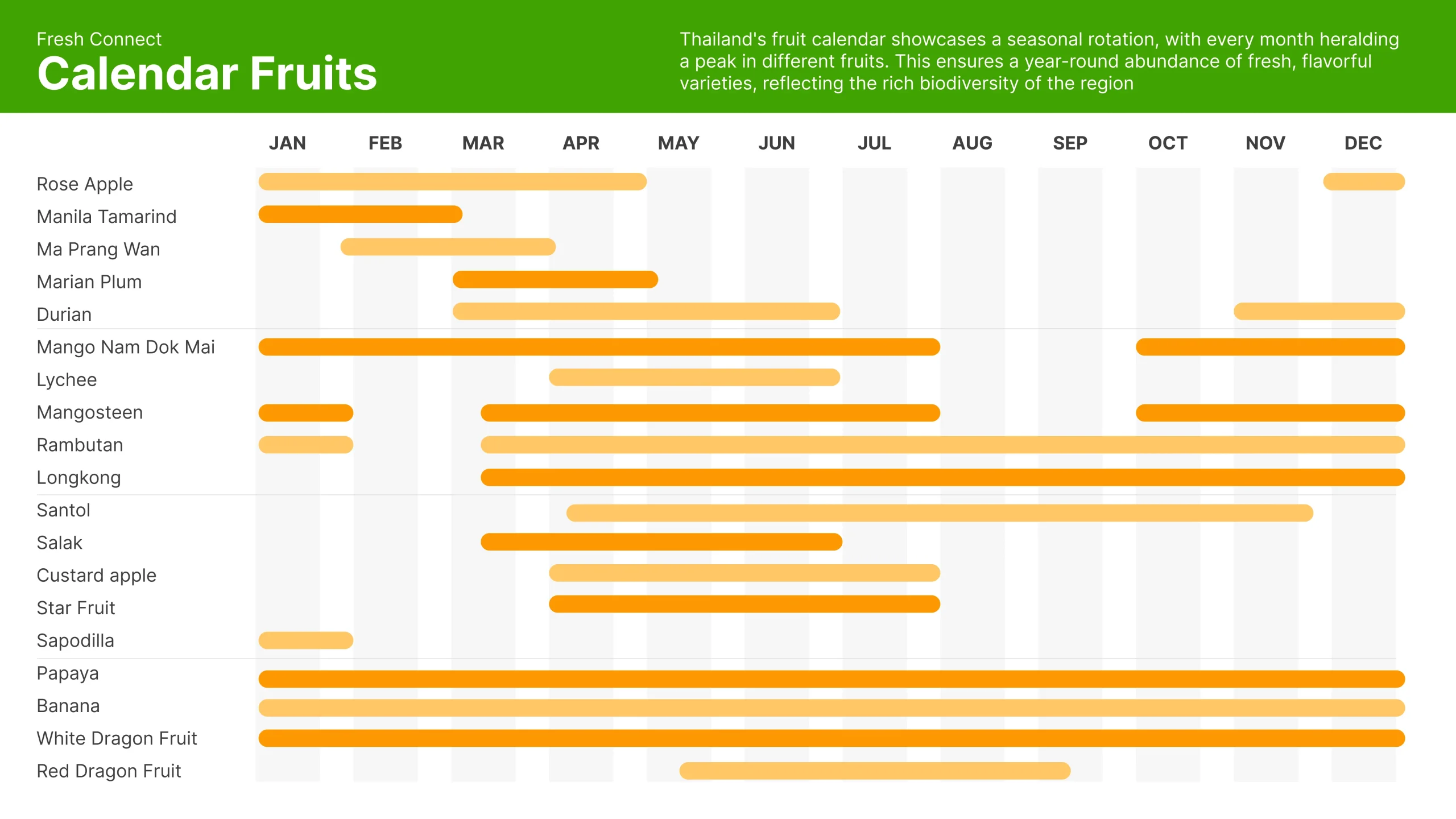
The main harvest window runs from May to September, peaking between June and August. A smaller secondary crop can appear from November to January in parts of southern Thailand. Mature trees produce 60 to 70 kg of fruit per season, and many orchards yield two harvests per year. For importers planning seasonal promotions, this gives a solid supply window to buy rambutan from Thailand at competitive volumes.
Thailand’s rambutan fruit export sector benefits from decades of tropical fruit logistics expertise. Packing houses, cold chain networks, and freight routes are already optimized for handling rambutan’s specific post-harvest requirements.
Fresh Point's Certifications and Quality Process
What separates Fresh Point from other exporters is the rigor applied at every step. Our packing house in Nakhon Pathom operates under GAP, GlobalG.A.P., GMP, HACCP, USDA Organic, IFOAM, and SMETA 6.0 certifications, meeting the food safety standards expected by major retail chains and importers globally.
Rambutan is one of the most perishable tropical fruits, and post-harvest handling directly determines shelf life. After harvest, our team hydrocools the fruit, then sorts and grades by size and quality before packing. Cold storage is maintained at 8–12°C with 90–95% relative humidity throughout the chain. Under these conditions, rambutan achieves a storage life of 14–16 days, with spine color and flesh quality preserved for retail display.
Rambutan Packing Options for International Buyers
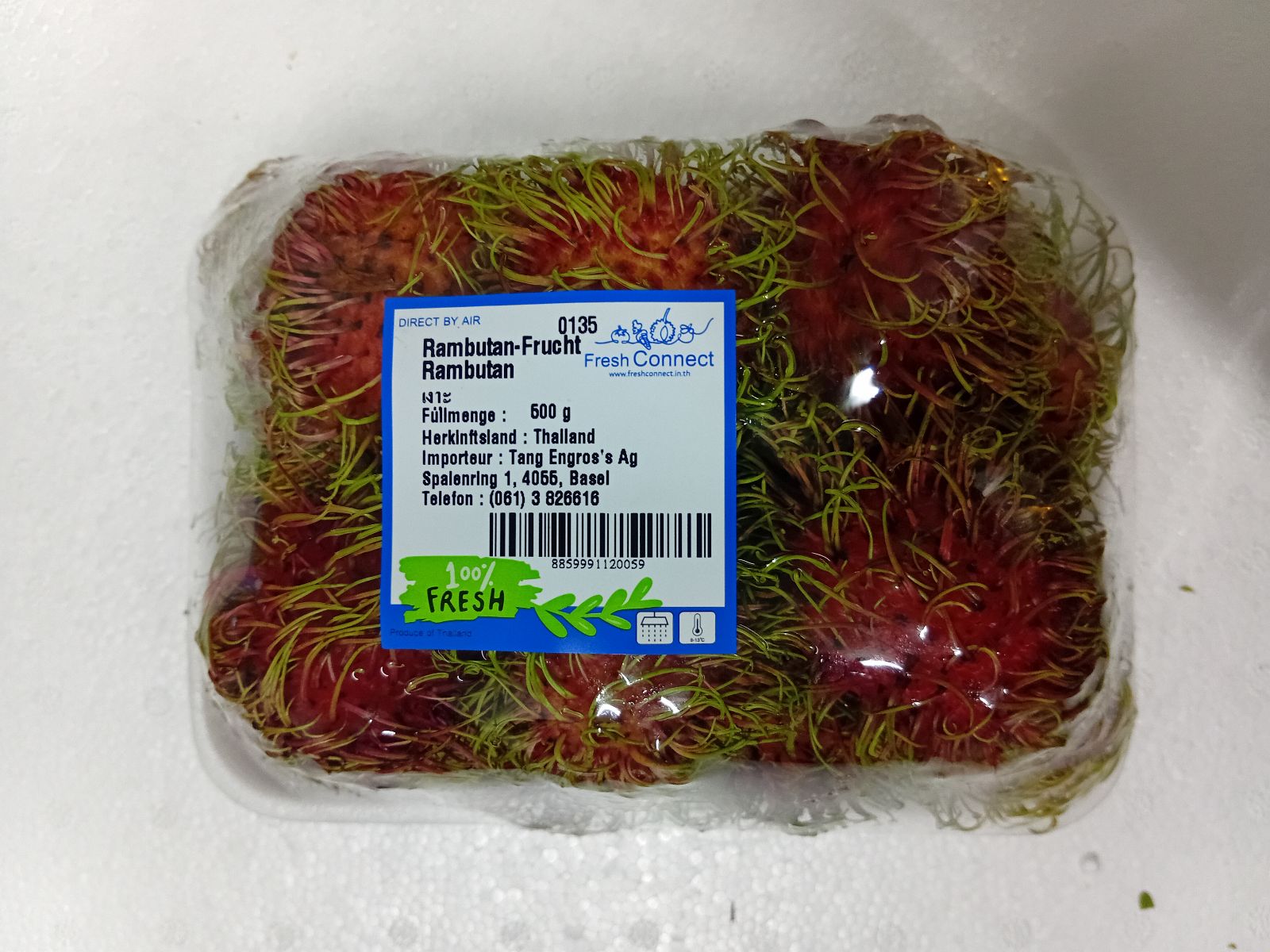
The spines that make rambutan visually distinctive also make it vulnerable to moisture loss and physical damage. That is why proper rambutan packaging in Thailand requires specialized attention. As experienced rambutan packaging suppliers, Fresh Point provides:
Every packing configuration is built to maximize airflow, control humidity, and protect fruit integrity during air or sea freight. For buyers looking to export rambutan wholesale, we accommodate both trial volumes and recurring large-scale orders with flexible packing runs.
Consolidated Shipping with Other Thai Produce
One advantage of working with Fresh Point is the ability to combine rambutan with other Thai fruits and vegetables in a single shipment. Mangosteen, longan, durian, baby corn, ginger, lemongrass, and chili can all share container space, which reduces per-unit freight costs and simplifies procurement for buyers sourcing across multiple categories. This is especially useful during rambutan export from Thailand peak season, when demand for Thai tropical fruits is high across multiple markets simultaneously.
Buyers We Work With
Have specifications in mind? Our export team can walk you through volume options, packing formats, and shipping routes. We issue detailed quotations covering product cost, packing, and freight by air or sea.
Get a Quote for Thai Rambutan
To discuss your specifications, preferred packaging, and shipping schedule, connect with our export team. We provide full quotations covering product pricing, packing configurations, and freight by air or sea.
GET IN TOUCH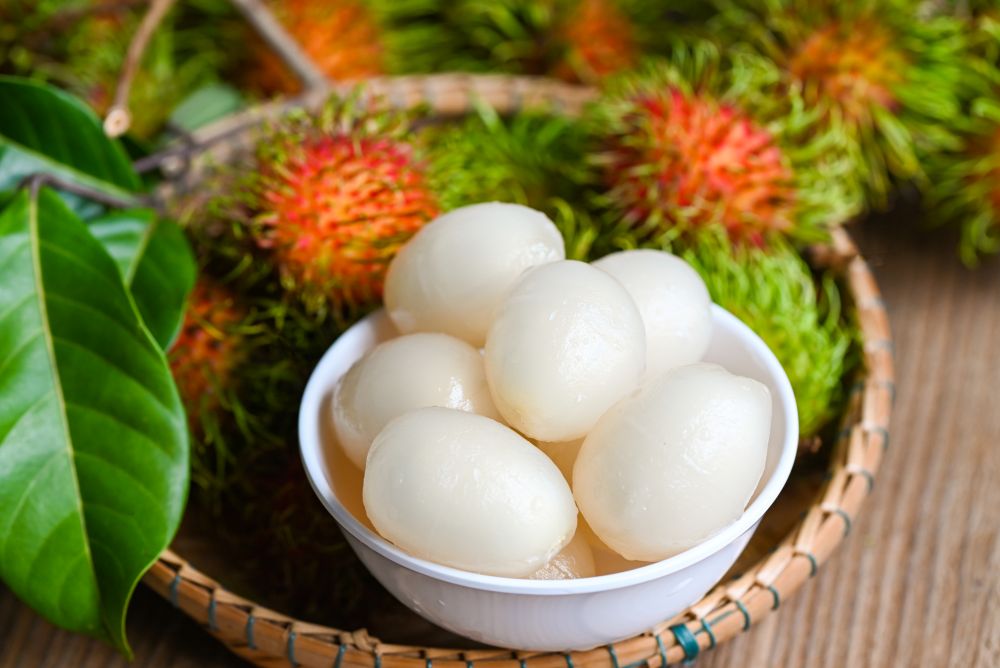
Frequently Asked Questions
Q: What is the shelf life of fresh Thai rambutan after harvest?
A: Fresh rambutan stored at 8–12°C with 90–95% relative humidity achieves a shelf life of approximately 14–16 days. At room temperature, rambutan lasts only 2–3 days. Proper cold chain management from packing house to destination is critical for maintaining spine color and flesh quality.
Q: When is the best time to order fresh rambutan for export?
A: Thailand’s main rambutan season runs from May to September, with peak availability between June and August. Placing orders ahead of the season helps secure supply and coordinate logistics for optimal freshness on arrival.
Q: What phytosanitary requirements apply to rambutan imports?
A: Requirements vary by destination. Fresh Point provides all standard export documentation, including phytosanitary certificates, certificates of origin, packing lists, and commercial invoices. Our team advises on country-specific compliance as part of the order process.
Q: How should rambutan be stored after delivery?
A: Keep rambutan at 8–12°C with high humidity (90–95%) to prevent spine browning. Temperatures below 7°C can cause chilling injury, leading to dark skin discoloration. The internal flesh typically remains unaffected if guidelines are followed.
Q: Can rambutan be shipped by sea or only by air?
A: Both are available. Air freight is standard for markets in Europe, the Middle East, and South Asia where maximum freshness is required. Sea freight with refrigerated containers works for closer destinations in Asia when transit times are shorter.
Q: What is the difference between Rongrien and Si Chompoo rambutan?
A: Rongrien is larger with thick, sweet flesh and long green-tipped spines. It is Thailand’s most exported variety. Si Chompoo has a pinkish-red skin, lighter flavor, and flesh that peels away from the seed more easily. Both are available through Fresh Point depending on seasonal supply.